
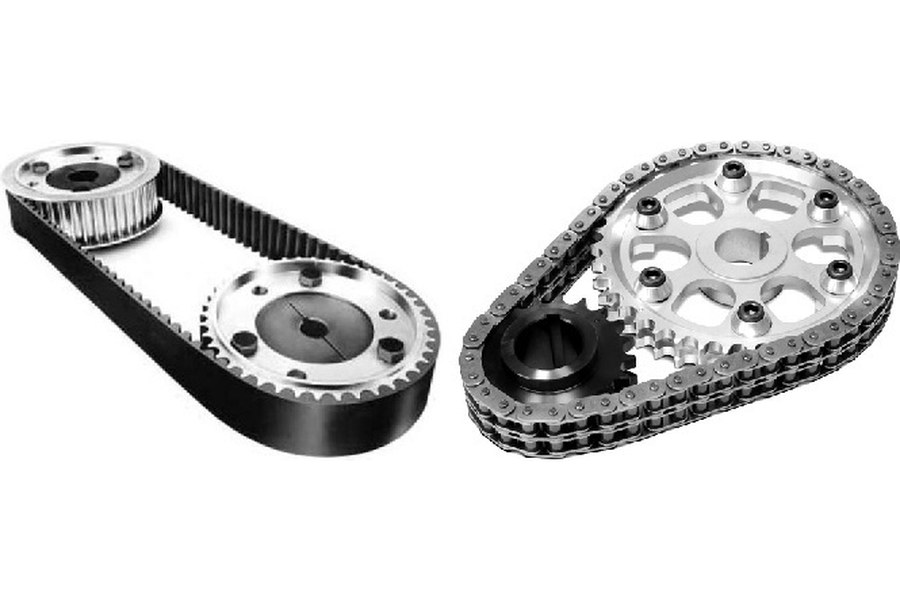
The engine dies while you're driving, without any warning sound, the tachometer drops to zero, and the starter cranks but won't bring it back to life. For a driver, this is one of the more unsettling situations, mostly because the cause is hidden under a cover and impossible to see from the outside. In most cases the culprit is a broken timing belt or a failed timing chain, the part that links the crankshaft to the camshaft and keeps the valves opening in the correct order.
How to tell the timing belt or chain has failed
The typical scenario looks like this: the car is driving normally, and then the engine suddenly loses power and dies as if the ignition had been switched off. There's usually no gradual loss of power beforehand.
- RPM drops instantly rather than gradually, unlike what happens when a car simply runs out of fuel;
- Trying to restart does nothing: the starter spins freely with no resistance, but the cylinders never fire;
- Sometimes there's a short metallic clank or bang under the hood right before the car stops;
- Several warning lights come on at once, including Check Engine and the oil pressure indicator;
- There's usually no smell of burning or smoke, unless the failure damaged something else along the way.
If the car doesn't respond to restart attempts at all afterward, and nothing is visibly leaking or sparking, there's a good chance the problem is in the timing drive itself, not the fuel system or the electrics.
Why it happens without warning
A timing belt rarely fails for just one reason. Usually several factors stack up at once.
- A missed scheduled replacement. Manufacturers usually specify a service life somewhere between 60,000 and 120,000 km, or a set number of years, but rubber ages and loses elasticity even with low mileage if the car sat unused for long stretches;
- A seized tensioner or water pump. The tensioner or idler pulley, and on many engines the water pump too, are driven by the same belt. If a bearing in one of these parts starts to seize, the belt takes a sudden jolt of load and can fail well before its scheduled interval;
- An oil film on the rubber. A leaking crankshaft or camshaft seal gradually soaks the belt in oil, which makes the rubber swell and lose its tensile strength;
- A chain behaves differently. It almost never snaps suddenly: the metal stretches gradually, and a worn tensioner or guide lets it start skipping on the sprocket teeth. The end result looks similar to a belt failure, but it develops over days or weeks of driving, with a telltale rattle on cold start rather than a single instant.
Why it can bend the valves and pistons
Engines fall into two categories based on what happens the moment the timing drive fails. On interference engines, the piston at the top of its stroke occupies the same space where an open valve might be at that instant. If the drive fails at the wrong point in the crankshaft's rotation, the piston simply bends the valves, and sometimes damages the pistons or the cylinder head itself.
On non-interference, or "safe," engines, the combustion chamber geometry is designed so that collision never happens: the piston physically can't reach the valves even if the camshaft stops suddenly. Repair in that case is limited to replacing the belt itself and the related pulleys.
The trouble is that guessing an engine's type from sound alone, or even from the make and model, without technical documentation is unreliable. It's smarter to treat any failure as a potentially serious one until a mechanic confirms otherwise after removing the timing cover.
What to do behind the wheel in the first few seconds
- Don't try to restart the engine. Every attempt turns the crankshaft and camshaft to a different position, which only increases the chance a piston will meet an open valve;
- Turn on your hazard lights and, while you still have momentum, steer smoothly onto the shoulder or as close to the edge of the road as you can;
- Set out a warning triangle, especially on a highway or in poor visibility;
- Turn off the ignition completely rather than leaving the key in a position where the starter could engage by accident;
- Call a tow truck, not roadside assistance that will just try to jump-start the battery. The problem isn't electrical, and a restart won't help here.
Can you drive even a short distance on your own
No, and there are no exceptions to that. Even a few meters on a belt with torn strands can turn a partial failure into a complete one. If the car stalled because a chain skipped rather than a full break, trying to keep driving can turn a relatively cheap tensioner repair into a full valve replacement job.
Towing on a rope deserves a separate warning. On many models, the timing belt or chain also drives the power steering pump, so once the engine stops, the steering becomes noticeably heavier and harder to control while the rope is under tension. A jerk from the rope can also spin the crankshaft over a turn or two, and if the valves are already partly bent, that finishes the damage. A flatbed tow truck removes that risk entirely, since the car simply rides on top with no load on the damaged part.
Belt or chain: different failure patterns
| Trait | Belt | Chain |
|---|---|---|
| Failure pattern | Usually sudden, no warning | Gradual wear, skips on sprockets |
| Typical service life | 60,000–120,000 km on schedule | Officially "lifetime," realistically 150,000+ km |
| Early warning signs | Almost none visible externally | Cold-start rattle, timing-related codes |
| Maintenance cost | Lower, scheduled replacement | Higher, but needed less often |
Bottom line
A snapped timing belt or an overstretched chain rarely gives you a chance to pull over smoothly on your own power. The engine simply stops, and what matters after that isn't how fast you react, but whether you react the right way: don't try to restart, don't try to keep driving, don't agree to a rope tow. If the engine died suddenly and the starter just spins with no result, call a tow truck in Dnipro, and the car will be brought in on a flatbed without risking further damage. The same logic applies to other sudden engine failures we've covered in our article on why a car won't start.
Frequently Asked Questions
Can you hear a timing belt is about to fail before it happens?
Sometimes: a whining pulley, a light squeal on cold start, or visible cracking in the rubber during an inspection. But more often the belt looks fine right up until the last rotation, so relying on sound alone is risky. Following the mileage schedule is more reliable.
How much does it cost to repair a car after a timing belt failure?
It depends on whether the valves got bent. Replacing the belt itself is inexpensive, but repairing the cylinder head with valve replacement and lapping can cost several times more than the scheduled maintenance that would have prevented it.
Are there engines where a timing belt failure doesn't damage the valves?
Yes, these are called non-interference engines: the piston simply doesn't reach the open valves even if the belt fails. But without documentation for your specific engine, it's not worth guessing, so it's safer to treat any failure as potentially serious.
Can a car with a broken timing belt be towed on a rope?
On many cars, the timing belt also drives the power steering pump, so the steering can become very heavy once the engine stops. A jerk from the rope can also spin the engine over involuntarily and finish off already bent valves. A flatbed tow truck avoids that risk entirely.
After how many kilometers is a timing belt usually replaced?
Manufacturers typically specify a range of 60,000 to 120,000 km or a set number of years, whichever comes first. The exact figure depends on the engine model, so it's worth checking the service manual rather than relying on general numbers found online.
How does a timing chain failure differ in symptoms from a belt failure?
A chain rarely snaps instantly. It usually stretches over time and starts skipping on the sprockets, which causes a characteristic metallic rattle on cold start and a Check Engine light long before the engine actually stops.